You’re Not Thinking Big Enough: Rebuilding Food Systems with AI Agents — Cody Menefee, Firecrawl
AI Engineer World's Fair 2026 · 18:25

Organization in the AI Engineer archive
Conference talks featuring speakers affiliated with Firecrawl when their sessions were recorded.
Firecrawl’s official about page describes an API for searching, scraping and interacting with the web, converting live pages into Markdown and structured data for AI systems. This archive connects that documented capability to Cody Menefee’s proposal for AI-assisted pasture rotation: a concrete example of the work required to turn collected knowledge into decisions involving changing physical conditions. The recording presents his Open Pasture project and proposed grazing system; it does not establish a Firecrawl-owned farming product or a validated autonomous deployment.
Menefee describes rotational grazing as dividing pasture into paddocks containing roughly one day’s feed, then moving animals daily so previously grazed land can rest. His example of 100 cows on 100 acres explains why unrestricted access can concentrate grazing and trampling rather than distribute them. Daily rotation requires moving animals, fences and water, plus recordkeeping. GPS collars can change virtual boundaries remotely, but selecting the next paddock still depends on rainfall, drought, grass growth and previous grazing impact. His cited 97% feedlot and 3% pasture figures lack a stated geography or supporting study in the recording; his preference for pasture is an explicitly stated premise.
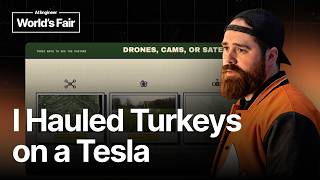
The recording compares drone orthomosaic maps, satellite imagery and trail cameras viewing a measuring reference. Drones offer detailed images but introduce operator training and flight restrictions; Menefee’s worldwide claim about autonomous-flight approval remains a speaker assertion. Satellites avoid farm-level flight operations but may lack the detail needed for grazing decisions; the daily coverage and one-meter resolution he attributes to Planet are unverified here. A camera aimed at a measuring apparatus provides a local reference for grass height and regrowth. These options address observation, while interpreting available biomass and longer-term plant diversity remains separate work.
Firecrawl’s official page documents search returning page content, scraping into formats including Markdown and JSON, and browser interaction for dynamic pages. Menefee reports using Firecrawl to collect farmer-video material and research papers into Open Pasture, which he identifies as his open source project. That reported use connects the company’s web-data capabilities to a domain knowledge base without establishing company ownership of the project. He identifies three remaining requirements: grazing knowledge, a vision layer measuring biomass and biodiversity, and accessible collar control. He describes vendor hardware/software coupling as an integration obstacle, acknowledges its business rationale, and asks for collars with open APIs, an open patent arrangement and ideally repairable, off-the-shelf components.
The proposed LLM would consider animal GPS positions, movement history, possible destinations, drought conditions and grass height across the farm. Decisions must account for the individual animal, herd, pasture recovery and wider farm conditions. Menefee’s closing formulation is a suggestion that a farmer can confirm or reject. Supporting more animals on fewer acres is an intended outcome, with no deployment results or measured gains supplied. His argument that grazing lacks a deterministic next-best answer motivates the proposal; it does not demonstrate that deterministic methods cannot contribute.
Menefee describes Pasture Bird’s wheeled chicken house advancing its own width every 24 hours. He explains that supplemental grain makes this regular movement different from choosing forage for cattle. In his account, ruminants graze first and chickens follow, fertilizing pasture and pecking parasites from droppings. Reduced parasite loads, medication costs and interventions are claimed benefits without quantified evidence here. He ends by urging developers to address physical problems with multiple changing inputs, emphasizing gathering and packaging data so models can reason over it. The talk closes with a Firecrawl hiring invitation and a distinction between his Open Pasture project and his day-to-day work at Firecrawl; that invitation is historical recording content, not confirmation of current vacancies or his current role.
AI Engineer World's Fair 2026 · 18:25
Affiliations reflect their AIE appearances, not necessarily current employment.