
AI software engineering agents
Factory
Factory builds Droids, AI agents that help enterprise engineering teams turn bug reports and other requests into software changes they can test, review, and ship. Factory 2.0 connects that workflow to production monitoring, so teams can trace an incident back to the pull request that introduced it. An alert in Slack can start a Droid investigation. Droid can propose a fix in a pull request and update the runbook so the next investigation can build on what it learned. Factory names NVIDIA, Adyen, and EY among its customers. Factory 2.0 · Incident Response
Teams can set how much Droid can do before asking for approval. They can connect models using their own provider credentials or use Factory Router to choose a model for each task based on quality, speed, and cost. Autonomy controls · Model selection
For larger projects, engineers use Missions to agree on features, milestones, and success criteria with Droid before it writes code. Once engineers approve the plan, Mission Control coordinates agents and tracks their progress. Comarch used Missions to coordinate planning, implementation, testing, and fixes on modernization projects, including work on XSLT. Workstreams start with a goal and let a lead Droid session delegate tasks as the work unfolds. Agents return pull requests for engineers to review. Teammates can share a workstream on Teams and Enterprise plans. Missions · Comarch case study · Workstreams · Shared workstreams
When a long session outgrows a model’s context window, Factory’s compression method summarizes the messages it removes and adds them to a running record of decisions, file changes, and next steps. Factory tested whether agents could still answer practical questions after compression, such as which files they had changed and what they should do next. Factory’s method scored highest overall in its evaluation. File tracking was the weakest area for all three methods tested. Context compression research
Matan Grinberg and Eno Reyes founded Factory in 2023. In May 2026, Factory acquired Lumetric, whose team had built AI workflows for deal teams and joined to help develop the next generation of Factory Desktop. In November 2026, Factory acquired HumanLayer and announced plans to bring shared workstreams and in-app collaboration on agent-written plans to its platform. Lumetric acquisition · HumanLayer acquisition
9 talks
Newest first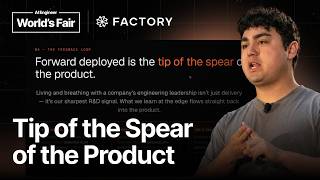

The Software Factory: From Bug Report to Production Code — Davis Palmie, Factory
AI Engineer World's Fair 2026 · 18:32

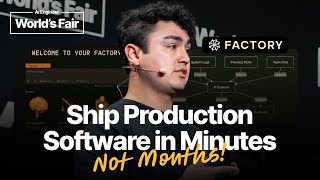
What It Actually Takes to Build a Software Factory — Tereza Tížková, Factory
AI Engineer World's Fair 2026 · 22:49

The Multi-Agent Architecture That Actually Ships — Luke Alvoeiro, Factory
AI Engineer Europe 2026 · 18:31

Loading more talks and speakers…
7 speakers at AIE
Affiliations reflect their AIE event listings and recorded appearances, not necessarily current employment.




Company sources · checked 2026-11-25
- Factory | Agent-Native Software Development
- Factory 2.0: From coding agents to software factories | Factory
- Incident Response
- Autonomy Level
- Model Independence
- Factory Missions
- How Comarch Is Building Its Own Software Factory | Factory
- Evaluating Context Compression for AI Agents | Factory
- Factory acquires Lumetric | Factory
- HumanLayer is joining Factory | Factory
- Workstreams
- Workstreams Quickstart